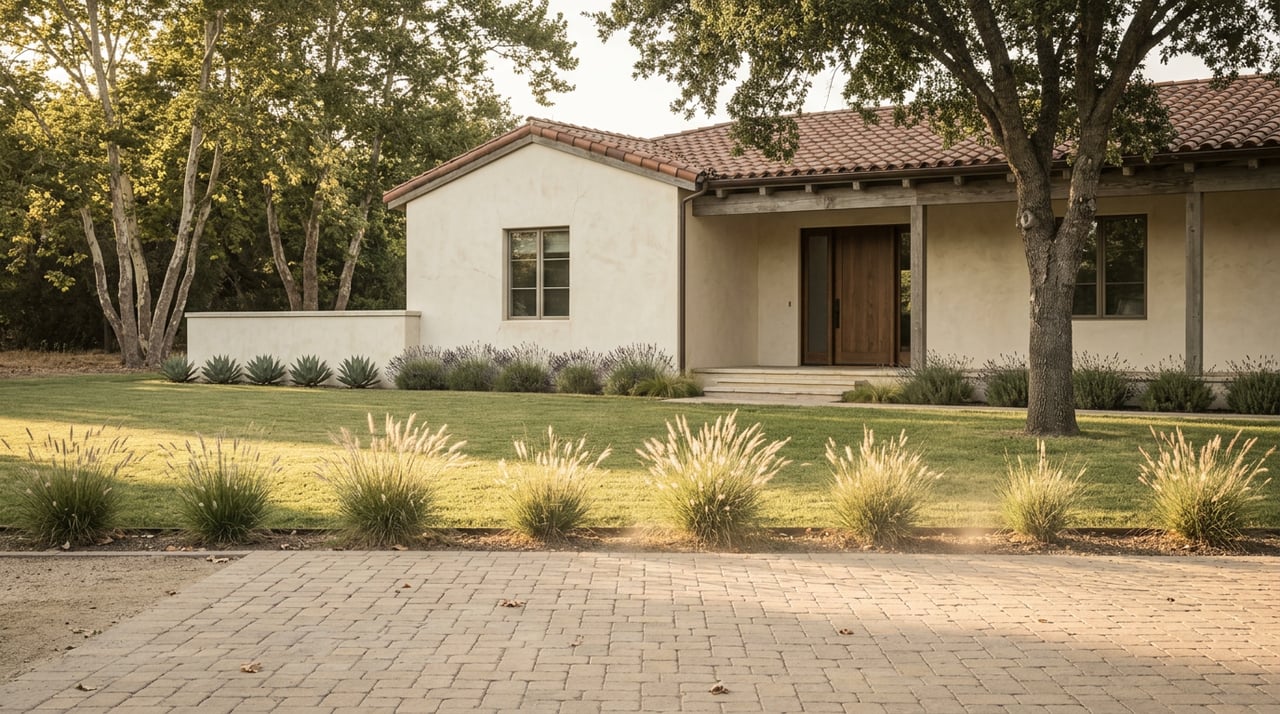
A listing that says "horse property" is telling you what the seller hopes you'll picture: a barn, a corral, maybe a hitching post out front like the ones you'll spot outside businesses on Sixth Street. It is not telling you whether the city of Norco will actually let you keep a horse there. That answer lives somewhere else entirely, in a zoning code most buyers never open until an escrow officer or a lender's title report forces the question. By then, an offer is already in.
Norco earned its "Horsetown USA" reputation honestly. The city's General Plan describes the community's rural, equestrian character as a deliberate policy goal, not an accident of history, and the municipal code backs that up with real teeth. But the same code that protects the lifestyle also gatekeeps it, parcel by parcel, in ways that surprise buyers who assumed acreage and a listing photo were enough.
"Horse Property" Is Marketing. The Zone Is the Law.
Every parcel in Norco sits inside a specific zoning designation, and that designation, not the listing copy, determines whether you can legally keep a horse there. The city's agricultural zones (A-E, A-1, A-2) generally allow animal-keeping by right, sized to a formula based on adult animal units. The Residential Single-Family zone, R-1, covers most of the city's newer neighborhoods and works differently. R-1 parcels carry a numerical suffix that sets the minimum lot size, so R-1-10 means a 10,000-square-foot minimum and R-1-20 means 20,000 square feet. Citywide, Norco requires single-family lots of at least 10,000 square feet to begin with, larger than the standard tract minimum in most Southern California cities.
Meeting the lot-size minimum is only half the test. Under Norco's R-1 code, animal-keeping is permitted only on lots that also front a street carrying a public horse trail. A half-acre R-1-20 parcel on a street with no trail designation does not automatically clear the bar, even though the acreage looks generous on paper.
The Overlay Most Buyers Never Ask About
There's an exception, and it's easy to miss if nobody points it out. Some R-1-10 parcels carry an Animal-Keeping Overlay, known as AKO, layered onto the base zoning. Where it applies, the overlay lets a property use the same animal-unit standards as an A-1 agricultural parcel, even without the trail-adjacent street frontage that ordinary R-1 lots need. The overlay has to be specifically designated on that parcel's zoning record. It isn't something you can infer from the neighborhood or assume because a similar house two streets over has horses.
Here's a quick reference for what each designation actually buys a buyer:
| Zone | Typical Use | Lot Size Rule | Horse-Keeping Rule |
|---|---|---|---|
| A-E, A-1, A-2 (Agricultural) | Rural estate and working agricultural parcels | Set by acreage suffix on the zoning map | Animal-keeping allowed by right, sized to the adult animal unit formula |
| R-1 (Residential Single-Family) | Standard Norco neighborhoods | Suffix sets minimum square footage (R-1-10, R-1-20, etc.) | Allowed only if the lot meets the size minimum and fronts a street with a public horse trail |
| R-1-10 with AKO overlay | Specific designated parcels within R-1-10 | 10,000 sq ft baseline | Grants A-1-level animal-keeping rights, trail frontage not required, but only where the overlay is formally mapped |
There's also a separate designation worth clearing up, because it confuses even longtime residents. Norco's Equestrian Historic District covers properties along Sixth Street between Sierra Avenue and California Avenue, including the commercial storefronts that reflect the city's ranching heritage. The district is a recognition, not a zoning right. City documentation is explicit that it imposes no new requirements or restrictions beyond whatever the property's underlying zone already allows. A building inside the historic district still follows the same zone-based rules as a parcel across town.
Why the Zoning Map Is Unusually Hard to Change Here
Most California cities can shift a zoning map with a simple council majority. Norco's charter sets a much higher bar. Changing any zone tied to animal-keeping, including A-E, A-1, A-2, R-1, R-3, the Hillside agricultural zone, or a Planned Development overlay, requires a four-fifths supermajority vote of the City Council. The same protection extends to the funding mechanisms that keep the trail system running: the Riding Trails Fund and its Trail Development Fee cannot be touched without that same supermajority.
That is not a small detail for anyone weighing a horse property as a long-term hold. It means the zoning classification a parcel carries today is closer to a durable asset than it would be almost anywhere else in the region, since undoing it takes more political will than most rezoning fights ever generate. The flip side holds too. If a parcel doesn't currently carry animal-keeping rights, getting the city to grant them later runs into the same high bar, so buying with the assumption that "it'll probably get approved eventually" is a weaker bet here than in a city where zoning changes pass on a simple majority.
What the Price Data Actually Tells a Horse-Property Buyer
Pull recent sales figures and the numbers don't agree with each other cleanly, which is itself useful information. Tracking the three months ending in May 2026, one major data provider put Norco's median sale price at $886,000, down 4.9 percent from the same window a year earlier, with price per square foot easing to $467, a 7.8 percent pullback. A separate source measuring the same spring stretch showed the citywide median at $975,000 as of May 2026, up from a trailing 12-month figure of $927,500. Inside the Norco Farms subdivision specifically, the January 2026 median sat lower, at $850,000.
These aren't contradictions so much as symptoms of a genuinely thin market. A report on March 2026 closings counted just 13 sales for the entire month, few enough that a single high-acreage estate or a single fixer-upper can swing the median by tens of thousands of dollars. That same report showed the March figure moving nearly 20 percent in a single month before settling roughly 8 percent above the year-earlier level once the volatility washed out.
The takeaway for a buyer isn't which figure to trust. It's that a citywide median tells you almost nothing about what a specific horse property is worth, because the value gap between a bare, un-trailed R-1-20 lot and a fully improved A-1 parcel with a barn, arena, and legal animal-unit capacity can run into the hundreds of thousands, and both can carry the same "horse property" label in a listing.
The Checklist Before You Write an Offer
- Pull the actual zoning designation for the parcel, including the numerical suffix, rather than relying on the listing description.
- If the zone is R-1, confirm the property's street carries an officially designated public horse trail, not just an informal path.
- Ask whether the parcel carries an Animal-Keeping Overlay if it sits in R-1-10 without trail frontage.
- Get the permitted adult animal unit count in writing rather than assuming the number of existing stalls reflects what's legally allowed.
- Check whether any barn, arena, or boarding setup was built under a conditional use permit, and confirm whether that permit transfers to a new owner.
- Verify the minimum lot size the suffix requires, since a lot just under the threshold may not qualify even if it looks large enough.
A Few Questions Worth Asking Directly
Does every residential property in Norco allow horses? No. Even within R-1, the zone covering most of the city's newer neighborhoods, animal-keeping requires both the minimum lot size for that suffix and street frontage on a public horse trail, unless the parcel has an Animal-Keeping Overlay on record.
Is a property inside the Equestrian Historic District automatically horse-legal? No. The district recognizes Sixth Street's ranching heritage between Sierra Avenue and California Avenue. It adds no zoning rights and removes none, so the property's underlying zone still governs.
Could the city rezone a horse-friendly neighborhood later? It's a much heavier lift here than in most cities. Norco's charter requires a four-fifths council vote to change any zone tied to animal-keeping or the trail funding mechanisms behind it, well above the simple majority most municipalities use.
Zoning code isn't the fun part of buying a horse property. It's the part that decides whether the barn in the listing photo is yours to use or someone else's mistake to inherit. If you're weighing a specific Norco parcel and want a second set of eyes on what its zone actually allows before you make an offer, Lisa Costa has walked enough of these transactions to know exactly which questions to ask the city before you're locked into escrow.