Pull up single-family listings in North Corona this month and the price tag on a typical house lands close to $751,000. Drive fifteen minutes south into Eagle Glen and a house on a comparable lot carries a price closer to $965,000. Same city, same week, same MLS, and a gap wide enough to buy a second car and still have money left for the down payment on a condo.
That gap is the part the citywide median hides. Altos Research pegged Corona's median list price at $839,945 the week of September 22, 2026, with inventory sitting around 346 homes and its market action index holding near 39, a reading the firm's own commentary describes as a market that has been cooling and plateauing even while staying technically in seller's territory. Redfin's sold-price data for the three months ending July 2026 puts the median closer to $790,000, with homes taking 46 days to sell. Both numbers are accurate. Neither one describes a house that actually exists. Nobody signs closing papers at the citywide median, because Corona isn't one market with one price. It's two markets wearing the same zip codes.
The Split Follows the 91/15 Interchange, Not a Street Grid
Corona sits at the meeting point of the 91 and 15 freeways, with a third route, the 71, feeding traffic through as well. That interchange is the hinge the whole price story turns on.
North of it, Central and North Corona hold the city's older tract housing, the neighborhoods built before the master-planned wave that followed. Recent neighborhood-level listing data puts North Corona's single-family median near $751,000 and Central Corona's near $725,000, the two most affordable single-family tiers in the city.
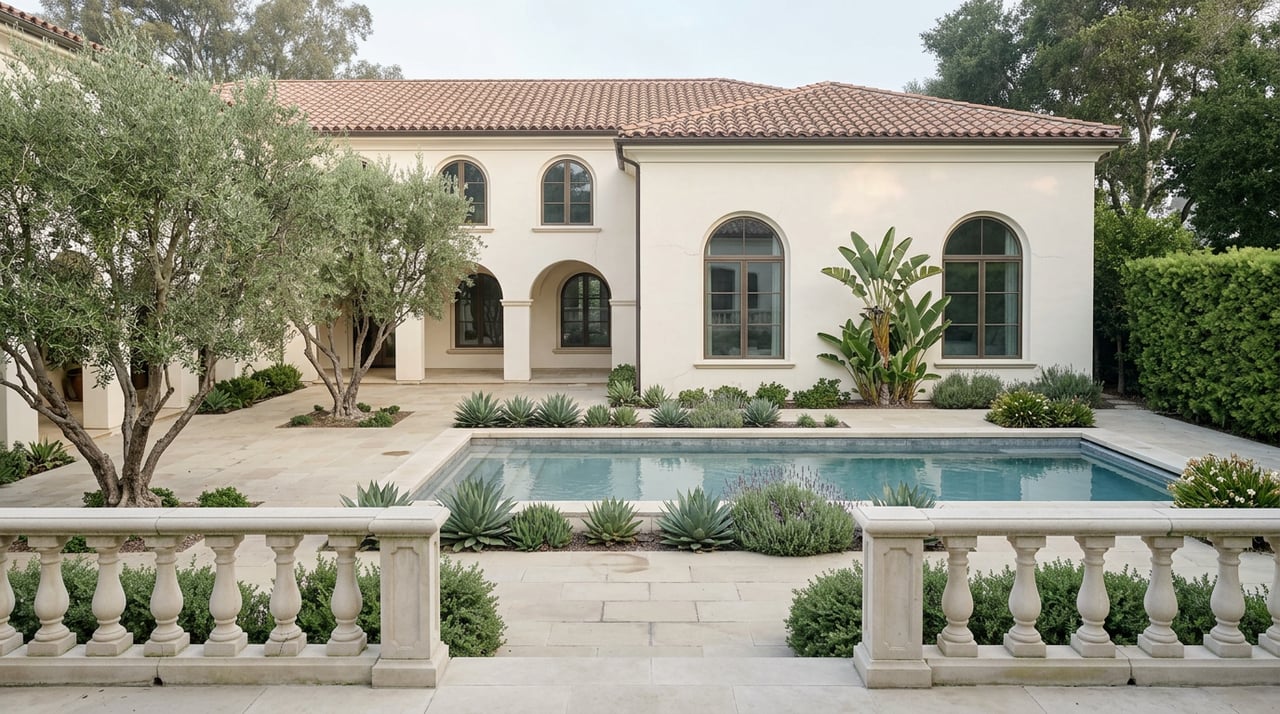
South of the interchange, the story changes. South Corona proper runs closer to $950,000. Eagle Glen, the golf-course community built around its own championship course, sits just above that at roughly $965,000. Green River and Dos Lagos, both organized around golf and lakeside amenities, land in between at approximately $870,000. Condominiums don't follow this pattern at all. Citywide, one-bedroom units run near $377,500 and two-bedrooms near $470,000, regardless of which side of the interchange they sit on. The North/South split is a single-family story specifically, which is its own useful piece of information if you're comparing a house to a house and not a house to a condo.
Some of that gap is simple vintage. Much of South Corona and Sierra Del Oro was built from the mid-2000s forward, while North Corona's stock skews older. New construction commands a premium anywhere. But vintage alone doesn't explain why the gap has held even as Altos shows the broader Corona market cooling. Something else is propping up the south side of that line.
The Buyers Closing the Gap Live in Anaheim Hills and Yorba Linda
Sierra Del Oro sits at Corona's westernmost edge, hugging the 91 freeway right where Riverside County meets Orange County. That location is doing real work in the price data. A buyer relocating from Irvine or Mission Viejo into South Corona typically saves somewhere in the range of $200,000 to $400,000 compared to a similar home in their starting market, while picking up more square footage for the money. That's not a rounding error. It's the kind of arbitrage that shows up as sustained demand pressure on one side of a city and not the other.
The trade works because the drive is genuinely short, most of the time. Off-peak, Corona to Anaheim runs about 25 minutes on the 91. During rush hour, that same drive can stretch to 60 to 90 minutes, which means the commute math a South Corona buyer runs in their head during a Sunday open house is not the commute they'll actually experience five days a week. The premium South Corona buyers pay is, in large part, a bet on how many of those days will go smoothly.
The Premium Isn't Free Once You're Living There
Here's where the arbitrage math gets more complicated than a simple price comparison. HOA dues and Mello-Roos assessments are common in Dos Lagos, Sierra Del Oro, Eagle Glen, and Chase Ranch, typically running from around $100 to $300 or more per month depending on the community. Much of North Corona's older housing stock predates those special assessment districts and, in many cases, carries no HOA at all.
A buyer comparing a $751,000 North Corona house to a $965,000 Eagle Glen house isn't just comparing two purchase prices. They're comparing a purchase price against a purchase price plus a recurring monthly obligation that didn't show up in the headline number. Over a 30-year mortgage, $200 a month in HOA and Mello-Roos adds up to $72,000 in payments that build no equity. That doesn't erase the OC-relocator math. It just means the real gap between North and South Corona is smaller than the sale prices suggest, and the real gap between South Corona and an equivalent Orange County home is bigger than the sale prices suggest, once carrying costs are counted on both sides of the comparison.
The Freeway Premium Is Really an Anaheim Premium
This is the part that gets missed most often. The South Corona price premium is priced around proximity to the free 91 corridor, which connects most directly to Anaheim Hills and Yorba Linda. It is not automatically a premium for every Orange County destination.
A buyer whose job is in Irvine rather than Anaheim is working with a different freeway map. The 241 Toll Road changes the calculus for that commute in a way the 91 corridor doesn't, and it can put a North Corona house back into contention for a buyer who assumed South Corona was the only option close enough to make an OC commute workable. The premium South Corona commands is a premium tied to a specific set of destinations. If your OC anchor point sits south of Anaheim, it's worth running the toll-road math before assuming the freeway-adjacent, higher-priced side of the interchange is the one that actually saves you time.
| Area | Housing character | Approx. single-family median |
|---|---|---|
| Central Corona | Older, closer to downtown | ~$725,000 |
| North Corona | Established tract housing | ~$751,000 |
| Green River / Dos Lagos | Golf and lakeside communities | ~$870,000 |
| South Corona | Newer construction, 2000s forward | ~$950,000 |
| Eagle Glen | Golf-course community | ~$965,000 |
What This Means If You're Comparing Corona Neighborhoods
If your commute anchor is Anaheim Hills or Yorba Linda, the South Corona premium is buying something real: a freeway proximity that holds up outside of rush hour and a newer housing stock that North Corona mostly doesn't offer at any price. That's a legitimate trade, and the data backs up why buyers keep making it.
If your anchor is Irvine or further south in Orange County, don't assume South Corona is automatically the right side of the interchange. Price out the 241 Toll Road against the free 91 corridor for your actual commute, and price the HOA or Mello-Roos obligation into whichever house you're comparing against whichever house on the other side of that gap. The citywide median was never going to tell you which of those two calculations applies to you. Only the neighborhood-level numbers, and your own commute, can do that.
Does every South Corona neighborhood carry Mello-Roos or HOA fees? Not universally. Dos Lagos, Sierra Del Oro, Eagle Glen, and Chase Ranch are the communities where these fees show up most consistently. Older pockets that predate those special districts can carry lower fees or none at all, so it's worth checking a specific address rather than assuming by neighborhood name.
Is the North/South gap only about commute time? No. Construction era plays a real role too. Much of South Corona was built from the mid-2000s forward, while North Corona's stock is generally older, and newer construction tends to command a premium on its own. The commute and OC-relocator demand explain why that gap has held even as the broader Corona market has cooled, not the entire gap by themselves.
If you're weighing a house on one side of the 91/15 interchange against a house on the other, the sale price is only half the comparison. I can walk through the full picture for a specific address, HOA and Mello-Roos included, and help you figure out which side of Corona actually fits your commute and your budget. Let's Connect with Lisa Costa.