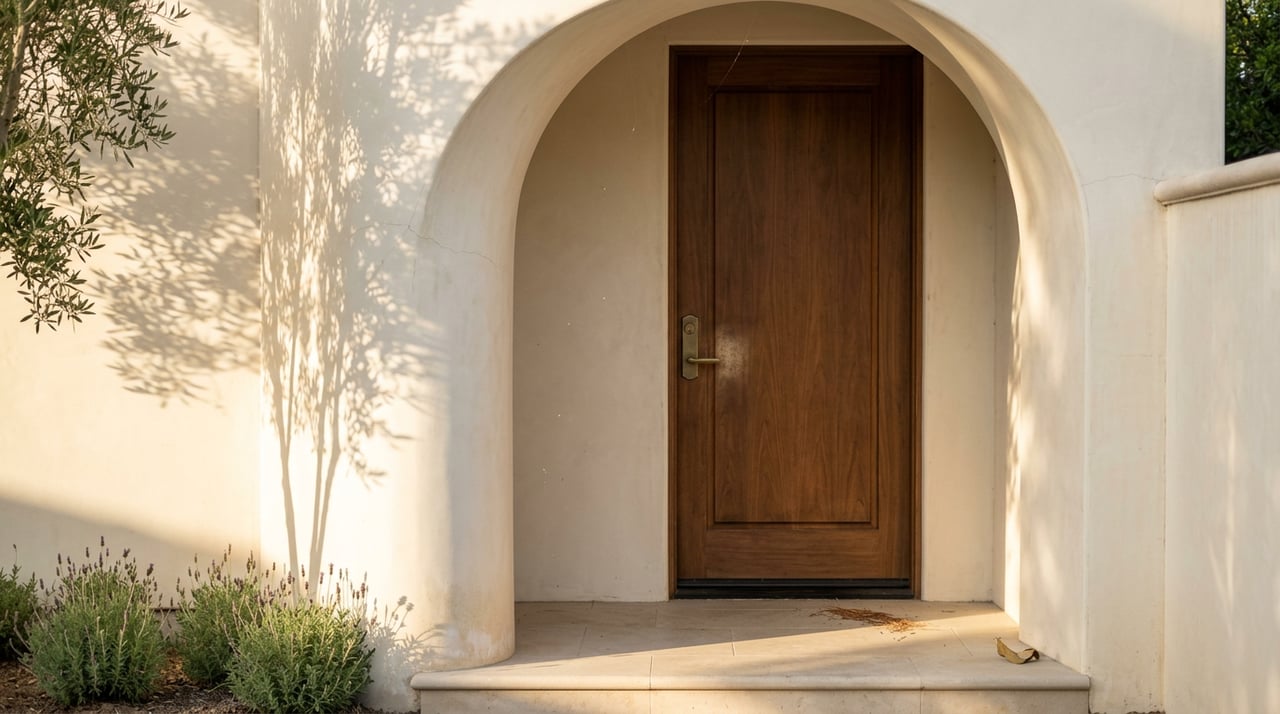
On August 15, 2026, the Riverside City Council spent part of a public hearing deciding what to call a house on Archdale Street. The home at 2139 Archdale, designed by the local firm Cohen and Busse in 1960, met the technical criteria for full City Landmark status. The council designated it a "structure of merit" instead. Historic Preservation Officer Scott Watson explained why: a previous owner had replaced most of the home's operable windows, and several fixed ones, with vinyl-framed glass. That single change was enough to knock the property down a tier.
Here is the part that matters more than the label. The council attached a condition to the lesser designation: the current or next owner has to restore the original window appearance as part of a ten-year Mills Act plan before the home can be reconsidered for full landmark status. Whoever owns 2139 Archdale isn't just holding a nicer plaque candidate. They're holding a work order with the city's name on it.
Most guides to the Mills Act stop at the tax savings. This one starts on Archdale Street because in Riverside's historic districts, the paperwork chained to that savings is the part that actually decides whether a purchase goes smoothly.
The Discount Everyone Quotes, Priced a Different Way
Riverside's own program materials describe Mills Act savings as landing somewhere between 20 and 60 percent a year, depending on how the county assessor's income-based valuation compares to a standard market valuation for that specific property. That range is wide on purpose. It moves with the home's assessed value, condition, and how the two valuation methods happen to line up in a given year, which is also why the same contract can save one owner far more than it saves the next.
That variability is exactly what draws buyers toward the craftsman and Spanish Revival stock in Wood Streets, Mt. Rubidoux, and the Seventh Street district over similarly priced homes elsewhere in the city. Riverside houses averaged roughly $660,000 as of mid-2026, with homes typically going pending in the low thirty-day range. Recent Wood Streets listings have ranged from around $380,000 at the entry level to well past $1.3 million for premium properties, a spread wide enough to sit on both sides of that citywide number. A Mills Act contract, where one exists, is often the reason a smaller or older home at the low end of that range still pencils out for a buyer willing to take on deferred maintenance.
Why the First Tax Bill Doesn't Show the Savings
Riverside's own Mills Act FAQ makes a point of walking owners through a timing detail that trips people up: a contract approved by the city in a given year doesn't start crediting qualified improvements until the following fiscal year, which runs July through June. The reduced tax coupon tied to that work typically doesn't show up until the fall after that. In practice, a savings percentage quoted on day one of ownership is not something a new owner sees reflected on the very next tax bill.
That lag also shapes what a listing's "Mills Act contract in place" line actually means at closing. If the contract has been active for years, the price already reflects savings the seller has been banking. If it was only recently approved, the buyer is stepping into a schedule of improvements and reporting, not an immediate discount.
There's a second timing constraint worth knowing before anyone assumes they can simply add a Mills Act contract to a home they already love. Riverside caps new contracts at an average of fifteen a year, no more than twenty, split roughly between thirteen residential and two commercial awards. Applications are only accepted from January 1 through the last business day in May. Miss that window, or lose out when applications exceed the allocation, and the earliest option is next year's cycle.
What the Program Actually Requires
| Item | Detail |
|---|---|
| Application fee | $126, non-refundable |
| Contract initiation fee | $957 |
| Application window | January 1 through the last business day in May |
| New contracts awarded annually | Average of 15, up to 20 citywide (about 13 residential, 2 commercial) |
| Inspection schedule | Interior and exterior inspection before contract approval, then at minimum every five years |
| Minimum term | 10 years, with automatic annual renewal after that |
Read as a whole, the table describes a multi-month city process with real fees and a recurring audit built into it, not a box a seller checks on a listing sheet. Riverside's planning staff also notes that applications are extensive enough that most owners bring in professional help to complete the calculations, which is worth budgeting for if you're the one applying rather than inheriting an existing contract.
The Part That Transfers Whether You Read the Paperwork or Not
California's Office of Historic Preservation is direct about how these contracts move with a sale. They automatically renew each year, they transfer to the new owner when the property changes hands, and they bind every subsequent owner to the same terms the original owner signed. There's no separate application for the buyer to file. The obligations simply come along with the deed.
That's what makes the Archdale Street condition worth paying attention to beyond the single hearing. Whoever eventually buys that home takes on the specific window restoration Officer Watson described as part of the existing Mills Act plan, not a general commitment to "maintain character." It's a defined task with a defined standard, and it has to happen before the home is eligible to move up to full landmark status.
Compare that to the second home the council designated the same evening: a mid-century modern property at 5958 Edith Avenue known as Edie, built in 1966 and 1967 for Dr. Robert R. Robinson and Margaret R. Robinson. The architect, E. Curt Steinmann, also designed Riverside's City Hall, including the council chambers where the designation vote took place. Current owner Anna Gaissert spoke in support of the designation and described the home's post-and-beam construction, knotty pine ceilings, and flat roof as largely intact. A buyer stepping into Edie's Mills Act plan is very likely inheriting a shorter to-do list than a buyer at 2139 Archdale, even though both homes now carry the same basic tax mechanism.
The lesson carries directly into any historic-district offer in Riverside. Before writing one, ask for the recorded Mills Act contract and the current status of its work plan, not just the line item confirming a contract exists.
What This Means If You're Shopping Wood Streets or Mt. Rubidoux Right Now
California law requires sellers to disclose whether a property is historically designated, and a Mills Act contract belongs in that disclosure package alongside the annual compliance reports and any Certificates of Appropriateness issued for exterior work completed during the current owner's tenure. Sellers who keep that documentation organized ahead of listing tend to move through escrow with far less back and forth, since a buyer's lender and title company will usually ask for the same paperwork anyway.
For buyers, the practical first step is confirming exactly what designation applies. Riverside maintains a Historic Resources Inventory that shows whether a property is a City Landmark, a Structure of Merit, or a contributor to one of the city's historic districts or neighborhood conservation areas, and staff in the Planning Division can confirm status on a specific address. If a Mills Act contract is attached, request the recorded document and the inspection history before removing contingencies, not after.
Owners already living in one of Riverside's thirteen historic districts have another resource worth knowing about. The Old Riverside Foundation publishes district-specific guides covering what stewardship actually looks like in each one, which is a useful gut check against whatever a listing agent tells you verbally.
Two Questions Worth Asking Before Escrow Closes
Can a Mills Act contract be canceled once it's in place? Only through a breach of contract or a formal notice of non-renewal from either the city or the owner, and cancellation carries financial penalties under the program. Most owners, and the buyers who follow them, simply keep the contract running rather than unwind it.
Can I apply for a Mills Act contract on an older home I'm about to buy? Only after the property carries a qualifying designation, Landmark, Structure of Merit, or a contributing property in a Historic District or Neighborhood Conservation Area, and only within Riverside's January through May application window, competing for one of roughly fifteen to twenty new contracts the city awards citywide each year.
A historic home in Riverside can be a genuinely good financial move. The Archdale and Edith Avenue designations from this August show two very different versions of what that move actually asks of an owner. If you're weighing a Wood Streets craftsman or a Mt. Rubidoux Spanish Revival against something newer across town, the contract and its work plan deserve the same scrutiny as the inspection report.
If you want a second set of eyes on a specific address, current designation status, or what a Mills Act contract would mean for your numbers, Lisa Costa knows the Riverside districts well enough to help you read the fine print before you write the offer. Let's Connect.