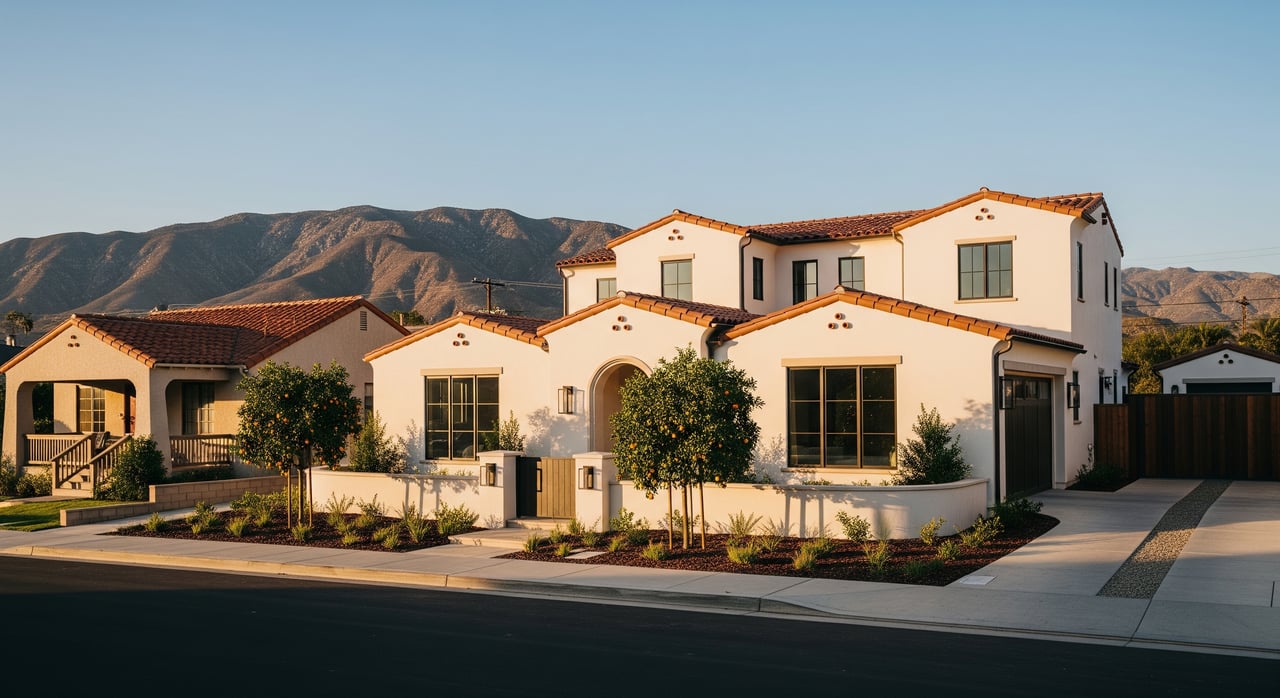
Choosing your first or next home in Corona can feel like comparing apples to oranges. Historic streets, established suburbs, newer master-planned communities, and semi-rural pockets each offer a different daily rhythm and budget picture. If you want to match your commute, lifestyle, and maintenance comfort with the right home type, a clear side-by-side view helps. In this guide, you’ll learn how Corona’s main neighborhood types differ, what to expect as a first-time or move-up buyer, and how to verify key details before you make a decision. Let’s dive in.
How Corona neighborhoods differ
Historic and downtown areas
Older homes closer to Corona’s core offer character, mature trees, and shorter drives to local services. You’ll find early to mid-20th century homes, bungalows, and Craftsman styles on smaller lots than typical suburban tracts. Many streets are more walkable, and HOA fees are less common.
For you, this often means lower monthly HOA costs and a vibrant local feel, with the tradeoff of potential renovation or system updates. Plan for due diligence on roofs, electrical panels, sewer laterals, and HVAC to understand true ownership costs.
Established suburban neighborhoods
Post-war through 1980s and 1990s communities dominate much of Corona. These areas include detached single-family homes on moderate lots, cul-de-sacs, and nearby parks. HOAs are less frequent than in newer tracts, and municipal services are generally predictable.
You get space and stability, but systems may be older. If you like a yard and garage and want fewer restrictions, this lane may fit, especially if you plan to update over time.
Newer master-planned communities
Newer tracts, often in southern and eastern parts of Corona and near the Temescal Valley edge, focus on modern floor plans and community amenities. You’ll see a mix of single-family homes, townhomes, and condos, along with pools, clubhouses, parks, and trails managed by active HOAs.
Expect energy-efficient features and newer systems that reduce surprise repairs. You’ll factor HOA fees into your monthly budget, along with community rules on parking, exterior changes, and rentals.
Semi-rural and equestrian-adjacent areas
On the edges of the city and near the hills, you’ll find larger lots, privacy, and room for outbuildings or horses. These properties can offer views and a peaceful setting, with more distance to major retail and services.
You may encounter specialized considerations like zoning, unique insurance needs, and infrastructure differences. Some properties could have wells or septic systems that require specific inspections and maintenance planning.
First home vs next home: what to prioritize
If you’re buying your first home
You likely want a manageable monthly payment and a location that fits your commute. Condos and townhomes can be more attainable and low-maintenance, especially in newer developments with amenities. Close-in older neighborhoods may also offer smaller single-family homes without HOA fees.
Think about your time and budget. Paying HOA dues can reduce your surprise repair risk and yard work. Skipping an HOA can lower your monthly costs but may mean more hands-on maintenance.
If you’re moving up for space or lifestyle
You may want a larger lot, more bedrooms, a modern primary suite, and easy access to parks and schools. Established suburban areas and newer single-family tracts often match these needs. If privacy and room for hobbies matter, a semi-rural property could be a better fit.
Your tradeoffs usually include a higher purchase price and property taxes, and potentially longer commutes if you move farther from core highways or transit.
Commute, amenities, and daily life
Commute and transit
Corona connects to major job centers through I-15, SR-91, and SR-71. Your commute to Orange County, the Inland Empire, or greater LA will depend on your proximity to these corridors. For rail and bus options, regional providers offer services that can change over time. Check current schedules and traffic conditions for specific addresses so you know what to expect at peak hours.
Parks, trails, and recreation
Older areas near the core can offer mature parks and shorter drives to local dining. Master-planned communities often include internal parks, pools, trails, and clubhouses. If you like turnkey recreation and planned events, newer tracts may deliver that convenience. If you prefer variety and local character, close-in neighborhoods can be appealing.
Schools and boundaries
Most of Corona is served by Corona-Norco Unified School District. Assignment boundaries and performance data change. Always confirm your specific address with current district maps and review state education resources. If school proximity is a priority, verify this early in your search and again before you remove contingencies.
HOA and maintenance tradeoffs
HOA costs and rules
Newer master-planned communities and many condo or townhome complexes have active HOAs. Fees vary and typically cover amenities, common-area upkeep, and sometimes exterior maintenance. Rules may affect parking, exterior changes, rentals, and community use.
Ask for HOA financials, reserves, meeting minutes, and CC&Rs during escrow. A well-funded HOA with clear rules can support neighborhood standards and help with resale. Highly restrictive rules can limit your options, so review them carefully.
Older home upkeep
Established and historic neighborhoods can reduce monthly costs if there’s no HOA. In return, you’ll budget for roofing, plumbing, electrical, sewer laterals, and HVAC updates on older properties. Request seller disclosures and service records, and line up inspections that match the home’s age and systems.
Risk and insurance checks
Wildfire and flood
Hillside and canyon-edge locations can face higher wildfire risk. Flood risk varies by area. Before you move forward, consult public hazard maps and confirm whether the home sits in a special flood hazard area that could require insurance. Your agent can help you pull the right resources and discuss cost implications.
Earthquake planning
Earthquakes are a statewide consideration. Ask inspectors about seismic retrofits and consider earthquake insurance as part of your budget planning. A clear plan can protect your investment and reduce stress after closing.
Three buyer profiles compared
Starter buyer in Corona
- Typical home types: condos, townhomes, or smaller single-family homes in close-in or newer communities
- Monthly focus: balance of mortgage, HOA (if any), insurance, and utilities
- Commute: prioritize proximity to SR-91, I-15, or transit options that fit your schedule
- Maintenance: lower-maintenance options can help you avoid surprise repairs in year one
- Smart moves: get pre-approval early, include HOA and insurance in your budget, and review all seller disclosures
Growing family buyer
- Typical home types: detached homes in established suburban areas or newer single-family tracts
- Space needs: extra bedrooms, yard space, garage storage, and flexible layout
- Schools: verify district boundaries and plan for future changes
- Commute: compare time to job centers across multiple routes
- Smart moves: compare per-square-foot costs and lot size, and consider nearby development that could affect traffic
Lifestyle or space seeker
- Typical home types: newer master-planned homes with amenities or semi-rural properties with larger lots
- Priorities: privacy, views, hobby space, trails, and community programs
- Costs: HOA dues in planned communities or specialized insurance/maintenance on larger properties
- Commute: expect longer drives if you choose more distance and privacy
- Smart moves: confirm zoning and property systems, and review HOA rules or rural infrastructure details
What to check before you write an offer
Showings and inspections checklist
- Ask for seller disclosures and service records for roof, HVAC, plumbing, electrical, and sewer.
- Confirm HOA fees, reserves, rules, and any special assessments. Request CC&Rs and meeting minutes.
- Verify school assignments for the property address and review current district resources.
- Check wildfire and flood hazard maps for the address and discuss insurance with a broker.
- Review typical utility costs and municipal services; ask for recent bills if available.
- Look for planned developments or road projects nearby that could change traffic, noise, or views.
- Compare commute times for your key routes at peak hours.
Where to verify details
- Market pricing and trends: check the local MLS for recent sales, time on market, and price per square foot by area.
- City and county records: use City of Corona and Riverside County resources for parcel facts, permits, and utilities.
- Schools: confirm boundaries and performance using Corona-Norco Unified School District and state education data.
- Transportation: use current traffic data and regional agencies for highway conditions and rail or bus schedules.
- Hazards: consult CAL FIRE for wildfire severity maps and FEMA for flood maps. Review state earthquake resources for seismic risks.
Ready to compare neighborhoods?
You deserve a clear, local game plan that fits your budget, commute, and lifestyle. Whether you’re buying your first place or moving up for more space, we’ll help you weigh HOA costs, maintenance, schools, and commute data so you can choose with confidence. Reach out to schedule a focused strategy session and start touring homes that truly match your goals.
Connect with Lisa Costa to map your next move.
FAQs
Which Corona areas work best for first-time buyers?
- Condos, townhomes, and smaller single-family homes in close-in or newer communities can offer more attainable pricing and lower maintenance.
How do HOA fees compare in Corona neighborhoods?
- Older and established areas often have no HOA, while newer master-planned communities and many condos charge monthly dues for amenities and upkeep.
Are there parts of Corona with higher wildfire or flood risk?
- Yes, edges near hills and canyons can face higher wildfire risk, and flood exposure varies by location; verify address-specific maps before you commit.
How will moving within Corona affect my commute?
- Proximity to I-15, SR-91, or SR-71 makes a big difference; check drive times for your exact address during peak hours and consider transit options.
Do HOA neighborhoods appreciate better than non-HOA areas?
- HOAs can support consistent standards, but appreciation depends on many factors like location, schools, commute access, and supply-demand in the area.
What should I verify about schools before I buy?
- Confirm current school assignments for the specific address with the district and review state education data, since boundaries and metrics can change.