You love that Norco is Horsetown USA, but planning fences and gates for a horse property can feel like a maze of rules, materials, and safety choices. You want your horses secure, your property looking sharp, and your setup compliant with city code. In this guide, you’ll learn exactly what Norco allows, what works best for horses, and how to plan a fire‑smart, budget‑friendly layout. Let’s dive in.
Know Norco rules first
Norco makes it simple to complete many fence projects without a building permit. The city’s building code exempts chain link, wood, vinyl, wrought iron, glass, and corral fences not over 6 feet high, and masonry fences up to 3 feet. Even when permit‑exempt, you must follow anchoring and setback rules for corrals and fences. Review the city’s permit exemptions in Norco Municipal Code Title 15 to confirm your scope and anchoring details for covered corrals (Norco Title 15 permit exemptions).
Front setbacks often have lower height limits than side or rear yards. In many zones, rear and side fences can be up to 6 feet, while front setback areas are commonly limited to about 3 feet. Always confirm your zoning and front setback before you build (Norco setbacks and fence standards).
Barbed and razor wire are restricted near Norco’s many public easements and pedestrian‑equestrian trails. You cannot place barbed or razor wire within 5 feet of these areas, and any allowed security wire must be mounted correctly on a base fence at least 6 feet tall and not angled toward a trail (barbed wire restrictions).
Electric fencing is regulated at the state and local levels. In California, energizers and controllers must meet specified safety standards under the Food and Agricultural Code. Electrified security fences also face additional limits under state civil law, and local jurisdictions may add rules. Confirm compliance before installing an energized perimeter or any electric component (California electric fence controller standards).
Quick permit checklist
- Is your fence 6 feet high or less and not masonry over 3 feet? You may be permit‑exempt.
- Are you within front setbacks? Expect lower height limits.
- Building a covered corral? Follow Norco’s anchoring and material standards even if exempt.
- Near a public easement or trail? Avoid barbed or razor wire.
- Planning electric fence components? Verify controller compliance and local restrictions.
Horse‑safe materials that work here
Choosing the right fence is about visibility, strength, and forgiving impact. Horses need fences they can see, with smooth surfaces that reduce injury risk if they spook or lean.
- Post‑and‑rail wood or composite: Very visible and horse‑friendly if maintained. Expect more upkeep in sun and heat.
- Pipe or metal rail: Durable and low maintenance when edges are smooth and rails are easy to see.
- Woven wire horse mesh: Helps prevent hoof entanglement. Add a top rail or plank for visibility.
- High‑tensile smooth wire with visibility tape: Cost‑effective with proper installation, but add visibility for young or green horses.
- Vinyl rail: Low maintenance and visible. Use quality, UV‑stable products suited to Inland Southern California heat.
For safety guidance on visibility, impact, and common designs, review equine extension recommendations (horse fencing best practices).
Heights, spacing, and gates
Most horses are safely contained with fence heights between 5 and 6 feet. Round pens and arenas often use 6 feet. Keep the bottom rail about 9 to 12 inches off the ground to prevent trapped hooves.
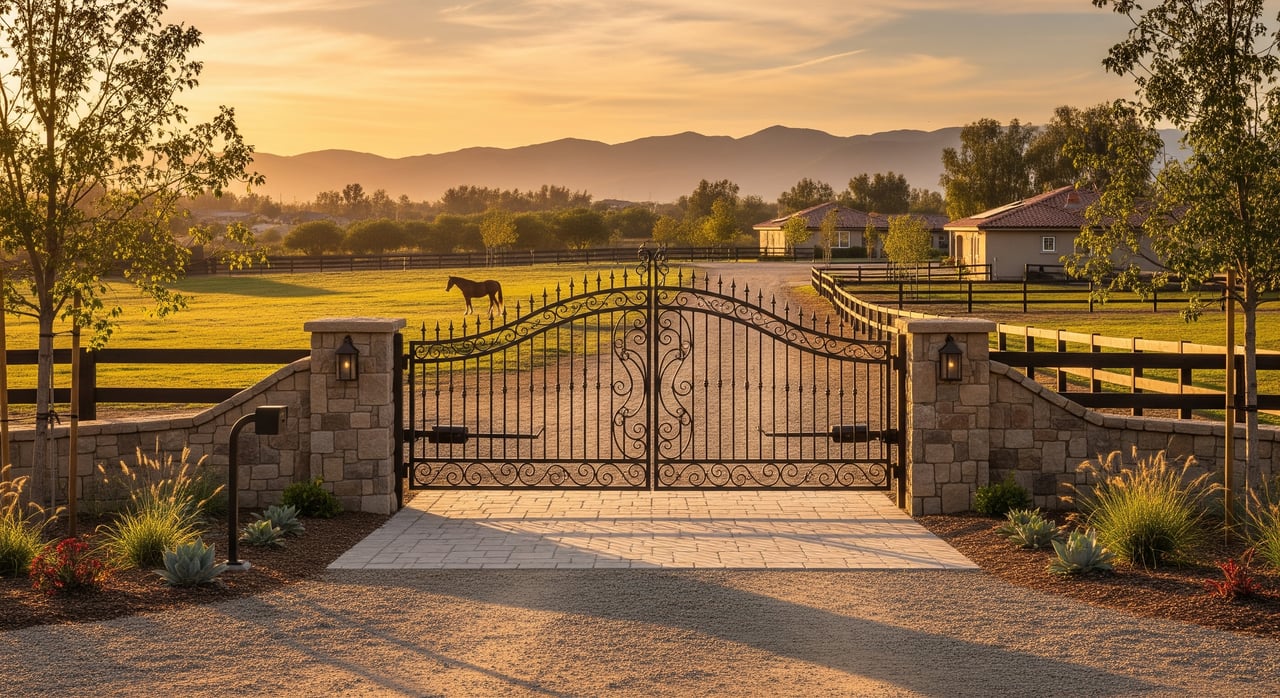
Gates deserve extra thought. A 4‑foot gate can work for a person leading a single horse, but pastures and barn access usually need 10 to 14 feet. A 12‑foot gate is a common standard that fits a horse trailer. Place gates away from corners so horses do not get pinned, and choose solid latches you can operate with one hand (gate widths and placement).
Fire‑smart fencing near your home
Wildfire safety matters in the Inland Empire. Combustible fences attached directly to a house can increase ember ignition risk. Where a corral or fence meets a structure, use a noncombustible or ignition‑resistant transition for the first several feet, keep vegetation cleared at the fence base, and maintain defensible space around buildings. See CAL FIRE’s home‑hardening guidance for practical ideas you can use today (CAL FIRE home hardening).
Budget basics and what drives cost
Installed fence costs vary by material, terrain, gates, and labor. National estimates place many options in these ranges: chain link or field wire at the low end, wood or vinyl in the mid‑range, and metal or ornamental systems higher. Acreage perimeters can add up quickly, especially with multiple 12‑foot gates. Use several local quotes to dial in Norco‑specific pricing (typical fence cost ranges).
Step‑by‑step plan for Norco properties
- Confirm zoning and front setback for your parcel so you know the height limits that apply (Norco fence and setback rules).
- Decide if your project is permit‑exempt or needs a permit, especially for masonry over 3 feet or any fence over 6 feet (permit exemptions and corral anchoring).
- Order a property survey before building on or near lot lines to avoid encroachment issues.
- If using electric components, verify the energizer meets California standards and check local restrictions (electric controller standards).
- Choose horse‑safe, visible materials and size your gates for trailers and tractors.
- Plan noncombustible transitions where fences meet structures and clear vegetation at the fence base (home‑hardening tips).
- Download city forms and speak with Building & Safety if anything is unclear (Norco Building & Safety forms).
A well‑planned fence and gate setup keeps your horses safe, protects your home, and preserves Norco’s equestrian character. If you’re sizing up a property or preparing to sell, the right improvements can be a real asset.
Ready to talk strategy for your Norco horse property or your next move? Reach out to Lisa Costa for local guidance tailored to your goals.
FAQs
Do I need a permit for a 6‑foot horse fence in Norco?
- Many fences 6 feet or less in common materials are permit‑exempt, but you must follow setbacks and corral anchoring rules. Taller fences or masonry over 3 feet typically need a permit.
Can I use barbed wire along an equestrian trail in Norco?
- No. Barbed or razor wire is prohibited within 5 feet of public easements and pedestrian‑equestrian trails, and its use is otherwise restricted.
Are electric fences allowed on residential horse properties?
- Electric components must use controllers that meet California safety standards, and electrified security fences face additional limits. Always confirm with Norco before installing.
What fence types are safest for horses in this climate?
- Visible, smooth‑surfaced systems like pipe rail with a clear top rail, or post‑and‑rail with horse mesh, are common choices. Prioritize visibility, smooth edges, and durability in sun and heat.
How wide should gates be for horse trailers?
- Plan for 10 to 14 feet, with 12 feet a common standard. Place gates away from corners and use secure, one‑hand‑operable latches.