If you are searching for a horse-friendly property in Norco, you already know one thing: not every lot that looks spacious is truly set up for horses. In Norco, the right fit depends on more than curb appeal or acreage alone. You need to know how zoning, trail access, lot layout, and existing structures work together so you can buy with confidence. Let’s dive in.
Why Norco stands out for horse property
Norco is widely known for its equestrian identity, and that reputation is backed by city planning and land use. The city describes itself as an animal-keeping, equestrian-oriented community with more than 400 acres of parkland and one of the largest horse-trail networks in the nation. Trails and equestrian circulation are a core part of how the city functions, not just a lifestyle feature.
That matters when you are buying. In many places, a "horse property" label can be loose marketing language. In Norco, horse-friendly living is tied to specific zoning rules, trail design, and site requirements that shape what you can actually do on a parcel.
What horse-friendly means in Norco
In Norco, horse-friendly usually comes down to legal animal-keeping rights plus a functional lot layout. A property may have a large yard, but that does not automatically mean it qualifies for horses under city rules. You need to confirm the zone, the usable area, the setbacks, and how the lot connects to trails or access routes.
The city allows animal keeping in several residential and agricultural zones, including R-1, A-E, and A-1. Each zone has its own standards, and those standards can affect whether the property works for your plans now and later.
R-1 properties
R-1 can allow animal keeping, but there are clear conditions. The lot must be at least 10,000 square feet, and the street must have a public horse trail. The use also has to follow the A-1 setback rules.
This is important because some buyers assume any detached home in Norco can support horses. In reality, trail frontage and lot size are key parts of the answer in R-1.
A-1 properties
A-1 zoning is heavily focused on animal keeping. In this zone, one equine counts as one animal unit, and lots created or developed in A-1 must include a primary animal keeping area, often called a PAKA, in the rear yard.
That area has to meet detailed standards. It must be at least 2,728 square feet on a pad under 20,000 square feet, or 3,304 square feet on a larger pad. It also needs to be flat usable land with no more than 4 percent slope, at least 30 feet wide, rectangular in shape, set back 35 feet from a habitable structure on an adjacent lot, and accessible by a clear 15-foot vehicular path.
A-E properties
The A-E zone is also designed with animal keeping in mind. It is intended to maintain contiguous undeveloped open land on each residential lot, and horses are allowed based on animal units tied to lot size.
Some larger-scale horse uses, such as horse ranches, training stables, boarding stables, or breeding farms, may require a conditional use permit if they go beyond the base animal-unit allowance. If you want flexibility for future use, this is a smart question to ask before you make an offer.
Why lot layout matters as much as lot size
One of the biggest mistakes buyers make is focusing only on square footage. In Norco, usable horse area matters more than the raw lot number on a listing.
For example, animal areas in the A-1 and A-E framework must be contiguous and usable. On lots of one acre or less, the open animal-keeping area must be one contiguous area. A yard with odd angles, slope issues, access barriers, or poorly placed improvements may not function as well as a smaller but better-designed parcel.
What to look for on site
When you tour a property, pay close attention to the rear-yard setup and movement around the lot. Ask yourself whether the horse area is actually practical for daily use, hauling, and maintenance.
Look for:
- Flat, usable space rather than just total lot area
- A rear-yard area with functional shape and width
- Clear vehicle access to the animal area
- Enough separation from nearby habitable structures
- Existing fencing, gates, and circulation that support horse use
A property can feel horse-ready at first glance and still miss the standards that matter most.
Trail access can change the value of a property
In Norco, trail access is a major part of the buyer experience. The city’s master trail plan says streets are lined with horse trails wherever possible, and the trail system is intended for pedestrians, equestrians, and bicycles. The city also notes that most residential lots have direct access to the trail system.
Still, you should not assume trail access based on a neighborhood name or general reputation. Trail connections should be verified parcel by parcel, especially because R-1 animal keeping depends on the street having a public horse trail.
What the trail system adds
Norco’s engineered trails are typically 12 feet wide and use decomposed granite or another city-approved material. The system includes connections to places such as Norco Hills and the Santa Ana River, along with features designed for safer crossings, including equestrian crosswalk buttons.
For buyers, this can shape both convenience and long-term enjoyment. A property with direct or practical trail connectivity may fit your daily routine much better than one that simply sits in an equestrian-oriented part of town.
Check barns, corrals, and covers carefully
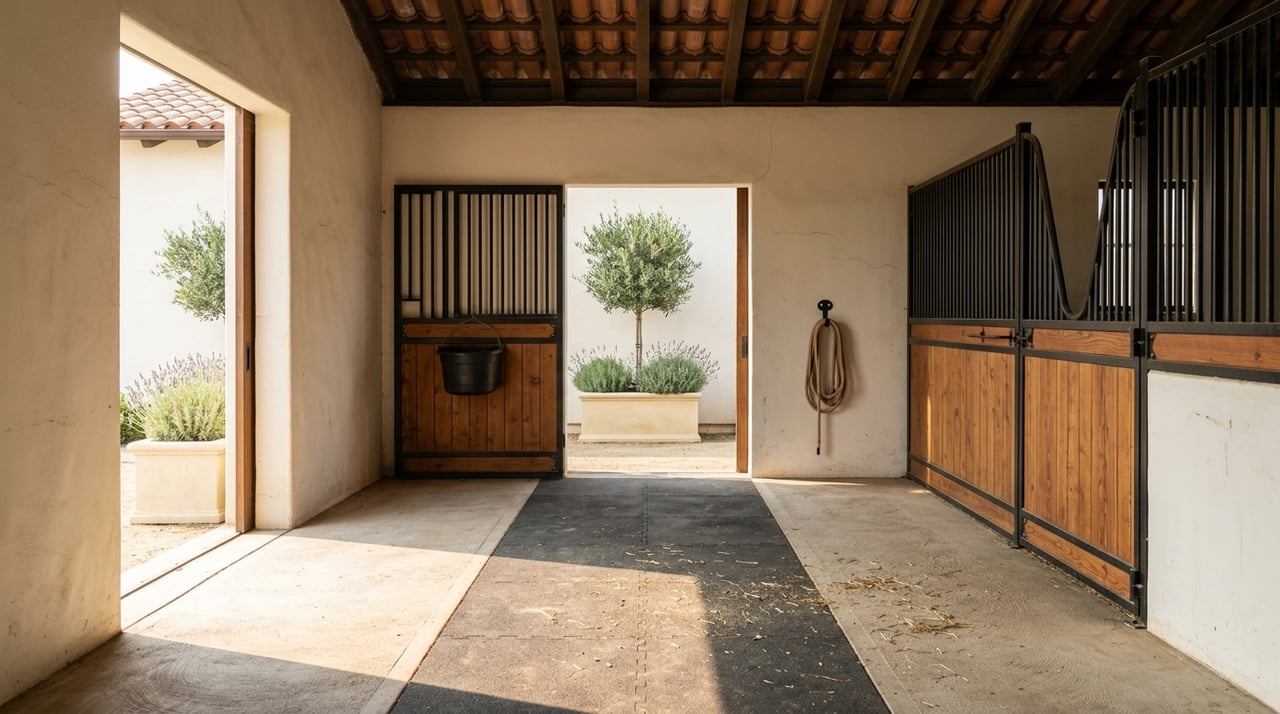
Existing horse improvements deserve close review before you buy. A barn, corral, shelter, or covered area may look useful, but you still need to know whether it was properly permitted and whether it complies with current rules.
Norco’s planning department lists separate applications for accessory buildings, large animal buildings, additional animal units, and conditional use permits for additional animals. That tells you two things: improvements and expansion are reviewed carefully, and what exists today should be verified rather than assumed.
A practical example
The city published a 2024 FAQ explaining that a specific 12-by-24-foot roofed, side-covered corral cover may be exempt from a building permit if it meets the city’s structural and setback requirements. Even then, the underlying 5-foot setback from property lines still applies.
This is a good reminder that permit exemptions are narrow. They do not erase other zoning or setback standards that can affect whether a structure is compliant.
A smart buyer checklist for Norco horse property
Before you move forward on a horse-friendly property, make sure you have answers to the basics. This can save you time, reduce surprises, and help you compare properties more accurately.
Start with these checks
- Confirm the exact zoning on the city’s Public GIS Zoning Map
- Ask Planning whether the parcel is in an animal-keeping zone
- Measure the usable horse area, not just the total lot size
- Check for flat rear-yard space, rectangular shape, and clear vehicle access
- Verify whether the parcel fronts or connects to a public horse trail
- Ask for permit history on barns, corrals, covers, and accessory buildings
- Review title documents, easements, and any CC&Rs tied to the lot
- Ask about drainage, manure handling, trailer access, and water supply
- Confirm whether additional animals or expanded facilities would need city approval
Questions worth asking early
A few early questions can tell you a lot about a property:
- Is horse keeping allowed on this parcel under its current zone?
- Does the lot meet the city’s layout and setback standards?
- Are the existing horse structures permitted and compliant?
- What approvals would be needed if you want more animals later?
- Does the property connect to a public horse trail in a practical way?
Does the Equestrian Historic District change the rules?
Some buyers worry that the Equestrian Historic District adds another layer of restrictions. According to the city, it does not create new requirements beyond existing zoning regulations.
The district covers about 6,000 residential properties in animal-keeping zones and is meant to preserve Norco’s equestrian character. That makes it part of the city’s identity, but your real due diligence still comes back to zoning, site layout, recorded lot information, and permit status.
The bottom line for buyers
Buying horse-friendly property in Norco is less about finding the biggest lot and more about finding the right legal and functional fit. Zoning, trail access, usable open area, setbacks, and permit history all play a role in whether a property supports the way you want to live.
When you look beyond the listing photos and ask the right questions, you put yourself in a much stronger position. If you want help comparing Norco properties, understanding local lot differences, and narrowing in on homes or land that match your goals, Lisa Costa is ready to help.
FAQs
What makes a property horse-friendly in Norco, CA?
- In Norco, horse-friendly usually means the parcel is in the right zone and meets the city’s rules for lot size, setbacks, usable animal area, and in some cases access to a public horse trail.
Can you keep horses on an R-1 lot in Norco, CA?
- Yes, animal keeping can be allowed on an R-1 lot if it is at least 10,000 square feet, the street has a public horse trail, and the property meets the required setback rules.
What is a PAKA on a Norco, CA horse property?
- A PAKA is a primary animal keeping area required on certain A-1 lots, and it must meet city standards for size, shape, slope, setbacks, and vehicular access.
Do you need to verify permits for barns and corrals in Norco, CA?
- Yes, buyers should check permit history and current compliance for barns, corrals, covers, and other accessory structures because future additions or expansions may also require city review.
Does the Equestrian Historic District add new rules for horse property in Norco, CA?
- No, the city states that the district preserves Norco’s equestrian character but does not add new requirements beyond existing zoning regulations.
Should you assume trail access when buying in Norco, CA?
- No, trail access should be confirmed for the specific parcel because it can vary by property and may directly affect whether animal keeping is allowed in some zones.